
Off Site Construction:
How it works
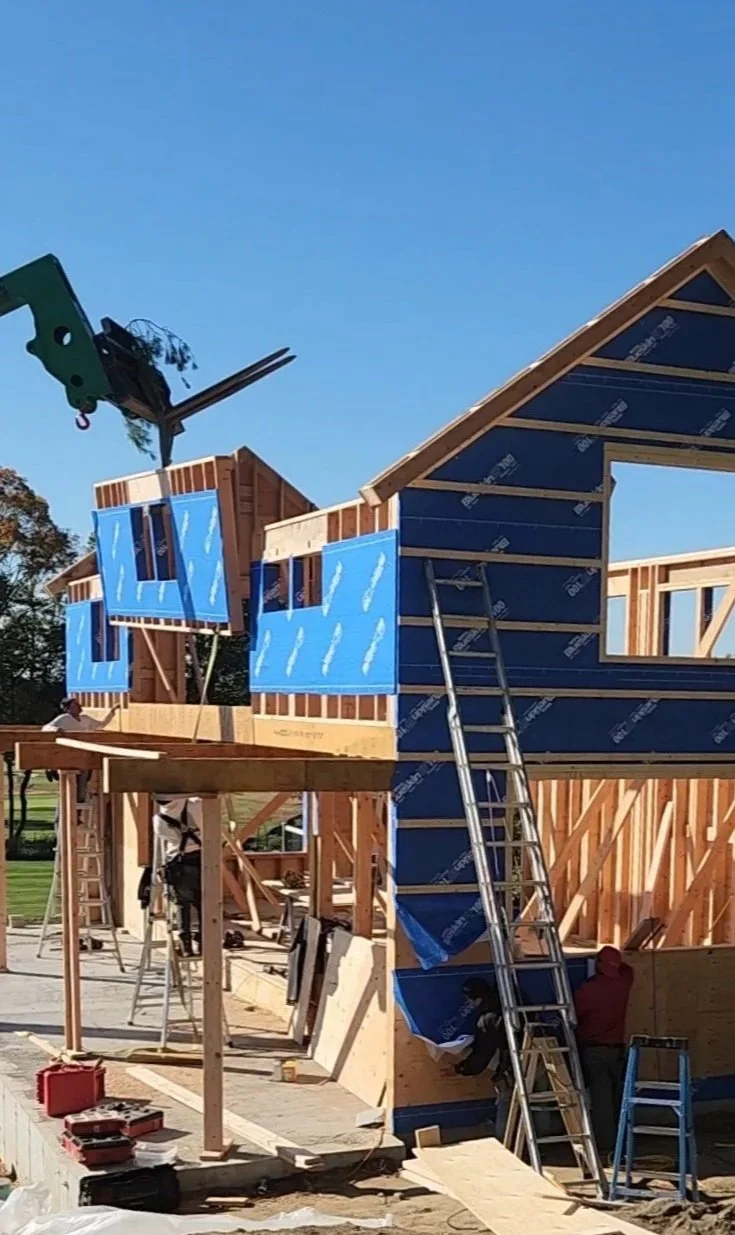
In our “Hybrid Timber Frame Homes” we prefabricate both the timber frame and the conventional framing components. This building system can be applied to any home style.
Similar to prefab homes, offsite construction is the prefabrication of building components in an offsite shop location. The building components are then shipped to the job site and assembled. This method greatly reduces build time while also increasing the overall quality of the build.
What is Offsite Construction?
What Our High Efficiency Panels Are Made Out Of.
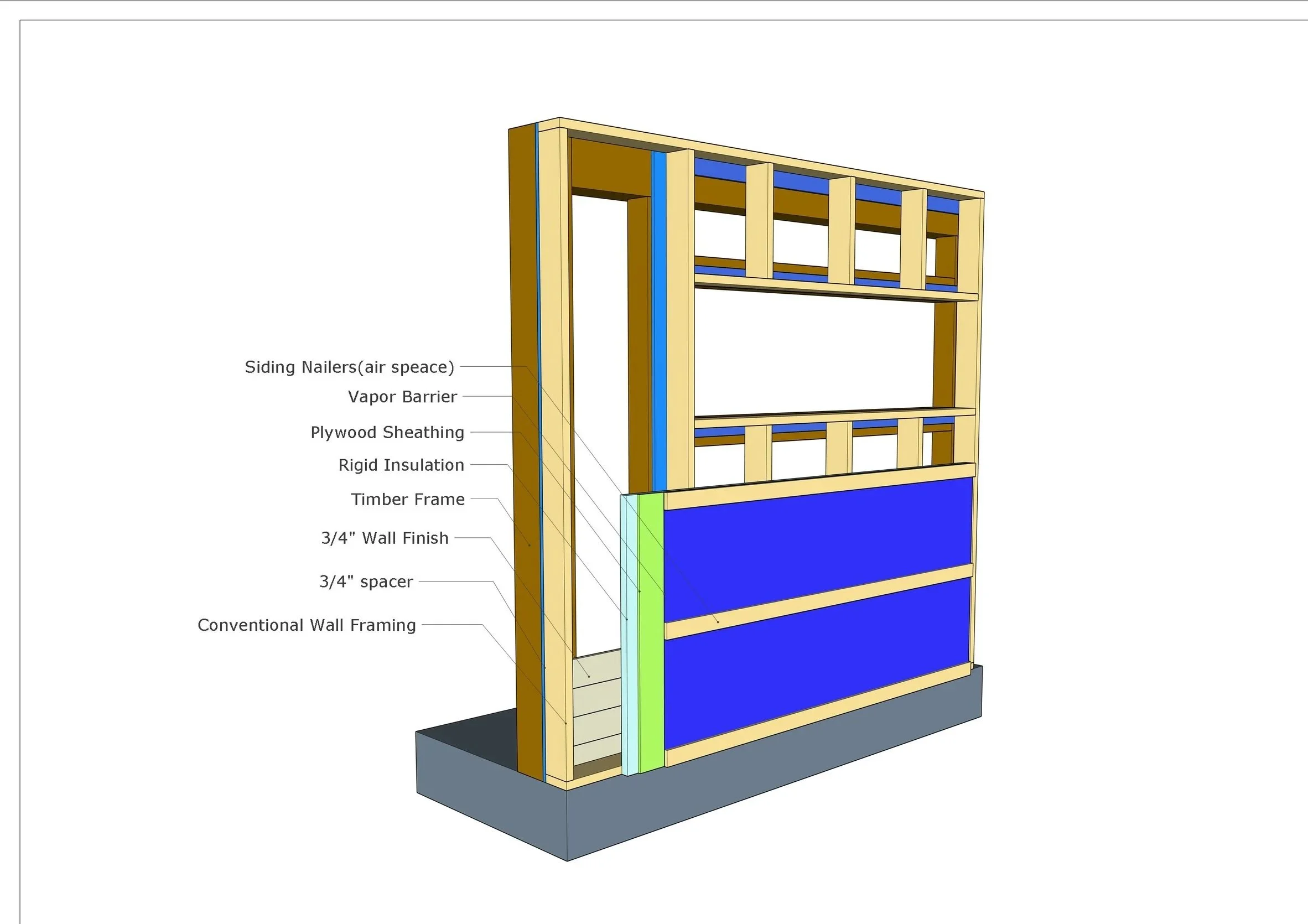
Our custom sized panels are built using a 2x frame (2x4, 2x6 or 2x8) and plywood sheathing. All necessary window and door openings are incorporated into these custom panels. The frame is then filled with your choice of insulation products to achieve both the desired R-value and indoor air quality standards.
-
Every panel is tailored to the specific needs of your project—custom sizes, thicknesses, and materials ensure a perfect fit for any design.
-
Optional exterior foam layers eliminate thermal bridging and boost R-values, maximizing energy efficiency in any climate.
-
By varying insulation types (batt or spray foam) and panel depth, we create solutions suited to virtually any environmental condition or application.
-
Our wood-framed panels add to the structural integrity of your build, often allowing for larger timber spans or reduced timber sizes.
-
Panels arrive ready for installation, streamlining construction and reducing labor on site, while maintaining high performance standards.
-
There’s no one-size-fits-all—each panel is built from the right materials to meet the exact requirements of your custom project.
-
Having a lumber truck deliver stacks of raw material to the jobsite and leaving it to the framing crew building the home to sort it out on the fly, is extremely inefficient. Assembling pre-built components cuts the labor time by 50 – 70%. With our offsite building approach to home construction we can streamline the framing process to minimize the duration of time your project is subject to the elements.
-
We can precisely calculate the quantities and lengths of all the building materials leaving almost no waste. All the work is done in a clean dry environment. Extra material is stored neatly so that it can be used in other areas of the build as opposed to being tossed in a dumpster.
-
Having an opportunity to view the entire structure from a 3 dimensional CAD standpoint prior to the start of the project has an incredible impact on the amount of costly mistakes avoided in the field. All the thinking, measuring and cutting are done in a controlled environment. Framing crews have all the guesswork taken out of the project. They are simply installing prebuilt components according to specs. Mistakes and miscalculations made out in the field are almost nonexistent.
-
Prefabricating the building components in a controlled environment produces an overall higher quality job. The attention to detail we can achieve is unmatched
What Are The Benefits Of Our Prefabricated Building Systems?
What Makes Our
Design Different?
We take the architectural drawings to the next level.
We start with your architect’s plans and then take them a step further. Using advanced 3D CAD software, we create a precise digital model of your home—down to every stud, joist, rafter and header. This model shows both the conventional framing and timber framing, giving you a clear view of how they work together in a hybrid timber frame. We then “break down” the build into a system of components that can be prefabricated in our shop. This model becomes the basis for our fabrication, ensuring every element is built exactly as designed.

Provide continuous insulation, minimizing thermal bridging.
Can be assembled quickly on-site, reducing construction time and upfront labor costs.
The OSB exterior facing is notorious for absorbing moisture and creating mold problems. OSB is far inferior to traditional plywood. OSB is garbage
Often made from renewable materials and require less wood than traditional framing producing less waste.
OSB is highly susceptible to water damage, including rot, mold, and mildew. Venting details are imperative to preventing catastrophic failure
Estimated lifespan of 25-30 yrs. Even less in areas with high moisture levels and poor ventilation. Most certainly the weak link of your timber frame build
The airtight nature of SIP panel requires careful attention to prevent the buildup of moisture, condensation, and pollutants.
Alterations to the design can be challenging and costly.
May reduce labor costs and construction time, however, the initial cost of the panels can be higher.
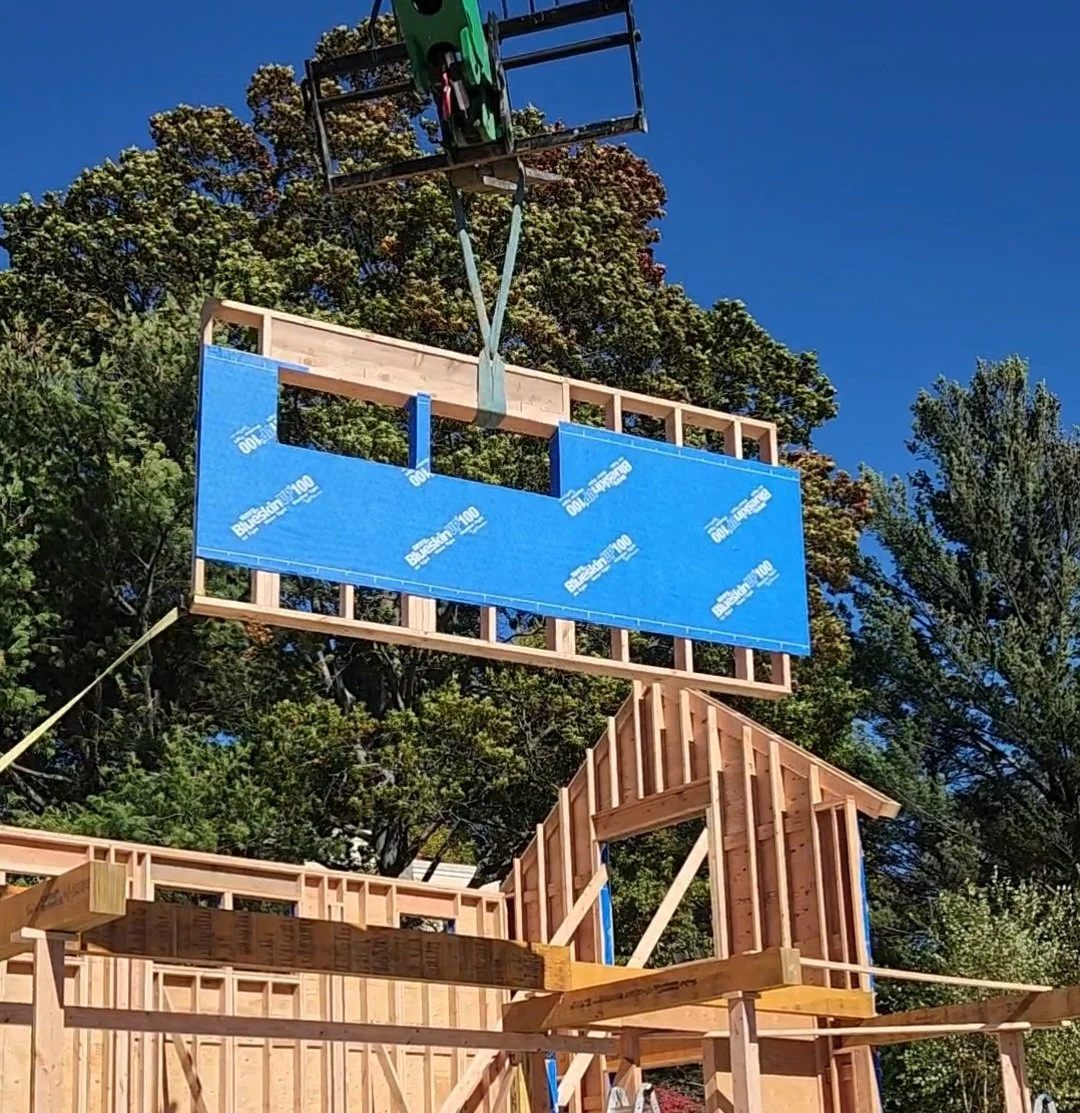
Ability to combine different products and thickness, achieving maximum R value as well as preventing thermal bridging.
Assemble on site just as easily as SIP panels. Assembly methods are similar to conventional framing
Structurally strong. Exterior facing is real plywood. Much stronger and more durable than OSB
Plywood and 2x framing material used in our panels are renewable resources as well
Plywood is much less impacted by moisture.
Plywood, when installed properly, can last 50 years to life.
Our wall and roof panels can be vented using the same methods as a conventionally framed home.
Alterations can be made relatively easily using standard tools and readily available materials
Our panels cost less than conventionally framed walls and roof. They require less material because they rely on the timber frame for structural support
Pre Built Systems vs
Structural Insulated Panels
ENERGY EFFICIENCY:
CONSTRUCTION TIME:
DURABILITY & STRENGTH:
SUSTAINABILITY:
MOISTURE SENSITIVITY:
DURABILITY:
AIRTIGHTNESS & VENTILATION::
DESIGN LIMITATIONS:
COST & INSTALLATION:
High Efficiency Panels
SIP (Structural Insulated Panels)